
COURSE II · LIGHT & SHADOW
How to Judge Values in Oil Painting: Light, Shadow & Form
Values are the different degrees of light and dark in your subject — and the tools that create the illusion of a third dimension. Learn to recognize, judge, and control value so your paintings read with depth and volume.
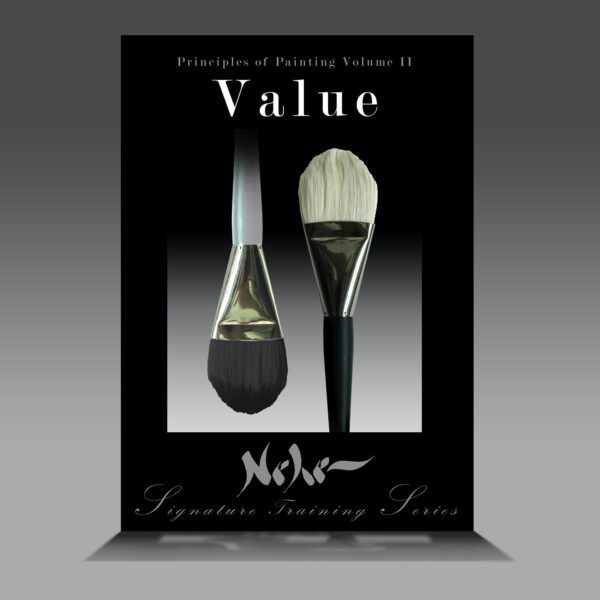
Course Overview
The architecture of light, shadow, and three-dimensional form.
What Value Is and Why It Matters
Value is the term painters use for the different degrees of light and dark in a subject. Every color has a value — its position on a scale from black to white — and understanding value is what allows a painter to create the illusion of three-dimensional form on a flat canvas. Without value, a painting stays flat no matter how accurate the drawing or how beautiful the color.
Think of value as the architecture of a painting. It's the underlying structure that tells the viewer where light is coming from, where shadows fall, and how forms turn in space. When the values are right, a painting reads as solid and real. When they're off — too flat, too compressed, or inconsistent — the whole painting feels wrong, even if the viewer can't articulate why. Learning to see and control value is the single most impactful skill a representational painter can develop.
The Value Scale and How to Use It
The value scale is a gradient from pure black to pure white, typically divided into nine or more steps. It's not just a theoretical tool — it's a reference you can hold up against your subject and your painting to check whether the values you're seeing and mixing are in the right range. By establishing a clear mental (or physical) value scale, you give yourself a standard to measure against.
The first challenge is learning to recognize values accurately. The human eye is easily fooled by color — a bright yellow and a dark blue can appear to be very different in value even when they're the same on a black-to-white scale. Brian teaches how to squint down your subject to strip away color and see the value structure underneath, and how to establish a reference point — a single value you're confident about — to use as a guide for judging every other value in the painting.
Value Relationships and Keying
No value exists in isolation. What matters is the relationship between values — how dark a shadow is relative to the light, how the halftones transition between them, and how the overall range of values (the "key") is set. A painting keyed high (mostly light values) reads differently from one keyed low (mostly dark values), and understanding how to key a painting higher or lower gives you control over mood and focus.
Value relationships are also what create the illusion of form. A sphere doesn't look three-dimensional because of the color you paint it — it looks three-dimensional because the values transition smoothly from light to shadow in a way that describes how the form turns. Get the value relationships right and the form reads; get them wrong and the form flattens out, no matter how carefully you've drawn it.
How Value Sets the Stage for Color
Value is the stage on which color performs. If the values are right, the color can sing — but if the values are wrong, no amount of color mixing will rescue the painting. This is why Brian teaches value before color, and why understanding value is the prerequisite for everything that follows in the color course.
In this course, Brian demonstrates the principles of value by painting a brush from life. You'll watch him establish the value structure, judge the relationships between light and shadow, and build the illusion of form using value alone. It's a practical demonstration that shows exactly how to apply these principles to your own work.
What You'll Learn
The Value Scale
Understand the black-to-white scale and how to use it as a measuring tool.
Recognizing & Judging Values
Learn to strip away color and see the value structure underneath — even when colors trick your eye.
Establishing a Reference Point
Anchor your value judgments with a single value you're confident about, then measure everything against it.
Value Relationships
See how values relate to each other — not in isolation, but as a system that creates form.
Keying a Painting Higher or Lower
Control the overall value range to shape mood, focus, and the way the painting reads.
How Value Sets the Stage for Color
Understand why value comes first — and why color can only perform on a solid value foundation.
Painting Demonstration Included
A painting demonstration is also included in this lesson. Watch as Brian applies the principles of Value to the subject of a paint brush while painting from life. By understanding how to effectively use Value, the artist is given a powerful tool for achieving the illusion of form and is then better prepared to understand the principles of Color and Edges.
Ready to Start Value?
1h 40m of step-by-step video instruction. One-time purchase, instant digital download.