
COURSE V · MASTERCLASS
Painting Outdoor Light: A Portrait Masterclass in Natural Sunlight
Learn how to paint the effects of outdoor light by applying all four principles — drawing, value, color, and edges — to a head study painted from start to finish. Eight hours of step-by-step instruction with dedicated palette and progress camera shots.
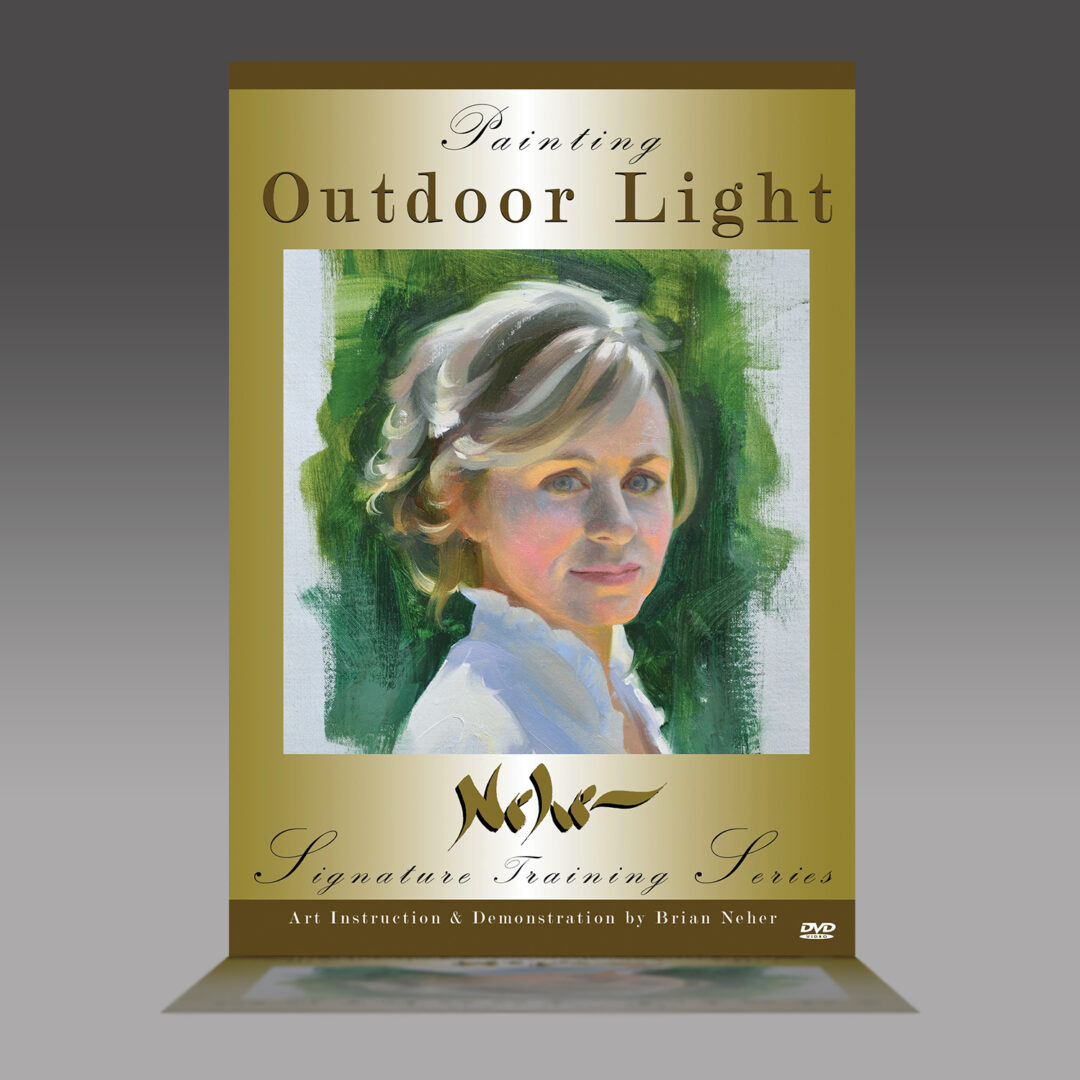
Course Overview
The complete masterclass — 8h from start to finish.
What Makes Outdoor Light Different
Outdoor light behaves differently from the controlled light of a studio. The sun is a single, intense, directional source — but it's also filtered and modified by atmosphere, time of day, and the surrounding environment. The result is a quality of light that's warmer, more directional, and more dramatic than indoor light. Shadows cast by outdoor light are deeper, the transitions between light and shadow are sharper, and the color temperature shifts more dramatically between sunlit and shaded areas.
Understanding these differences is the first step to painting them convincingly. In this masterclass, Brian explains what makes outdoor light distinct from indoor light — the value relationships, the warm and cool temperature shifts, and the way the light shapes the forms it falls on. You'll learn to see outdoor light as a specific set of conditions to recognize and reproduce, rather than a general feeling to approximate.
Applying the Four Principles to Outdoor Light
This course brings together everything from the first four courses and applies it to a single, real-world subject: a head study painted in outdoor light. Brian demonstrates how to use drawing to establish accurate proportions, value to key the painting for the intensity of sunlight, color to capture the temperature shifts between light and shadow, and edges to guide the eye through the forms.
You'll see how each principle contributes to the whole — how keying the painting higher or lower in value sets the overall light, how color temperature changes create volume where the form turns from light into shadow, how complementary colors bring vibrancy to the sunlit areas, and how working within a limited value range keeps the painting coherent. These aren't abstract concepts here; they're practical decisions made in real time on a real painting.
Painting a Head Study from Start to Finish
The core of this masterclass is a complete head study painted from start to finish. Brian walks through every stage of the process — the initial drawing, the block-in of values, the development of color and form, and the final refinement of edges and detail — while explaining the reasoning behind each decision. You won't just see what he does; you'll understand why he does it.
Dedicated camera shots of the palette show exactly how Brian mixes his colors, and close-up shots of the work in progress show how the painting develops stroke by stroke. This is as close to looking over a master painter's shoulder as you can get without being in the studio. The goal is that by the end, you'll understand not just the specific steps of this one painting, but the decision-making framework that you can apply to any subject in outdoor light.
Bonus Material: Indoor vs. Outdoor Light & Flesh Tones
The masterclass also includes bonus material that deepens your understanding of light. Brian discusses the specific differences between indoor and outdoor light — how the value relationships change, how the temperature shifts differ, and how to adjust your approach when moving between the two. Understanding these differences makes you a more versatile painter, able to work confidently in any lighting condition.
A palette demonstration of how to mix flesh tones in outdoor light is also included. Flesh tones are one of the most challenging aspects of portrait painting, and seeing how Brian approaches them — which colors he starts with, how he adjusts temperature, and how he keys the values for sunlight — gives you a practical, repeatable method you can apply to your own portraits.
What You'll Learn
Accuracy in Measuring
Apply drawing principles to establish accurate proportions in an outdoor head study.
Establishing Reference Points
Use landmarks to keep the painting on track from the first marks to the finishing details.
Keying for Sunlight
Set the overall value range higher or lower to match the intensity of natural outdoor light.
Color Temperature for Volume
Use warm and cool temperature shifts where forms turn from light to shadow to create dimension.
Complementary Colors in Outdoor Light
Bring vibrancy to sunlit areas and depth to shadows using complementary color relationships.
Limited Value Range
Work within a controlled value range to keep the painting coherent and readable.
Value Relationships
Understand how values relate to each other in outdoor light — and why getting them right matters most.
Painting Demonstration Included
Dedicated camera shots of the artist's palette as well as close-ups of the work in progress provide the viewer with as much information as possible.
Bonus Material
Bonus material is included which discusses the differences between indoor and outdoor light, value relationships, and using warm and cool temperature changes when painting outdoor light. A palette demonstration of how to mix flesh tones is also included in this additional material.
Ready to Start Painting Outdoor Light?
8h of step-by-step video instruction. One-time purchase, instant digital download.